How Was Clay Formed - Also a rock that is composed essentially of clay particles. Clay minerals form in the presence of water [1] and have been important to life, and many theories of abiogenesis involve them. There are 35 recognized clay mineral species on earth, they make muds stick together ('cohesive'), or able to flow ('plastic'). Clay, soil particles the diameters of which are less than 0.005 millimeter; Clay minerals are hydrous aluminium phyllosilicate minerals, composed of aluminium. Clay has a high content of clay minerals that give it its plasticity.
Clay has a high content of clay minerals that give it its plasticity. Clay, soil particles the diameters of which are less than 0.005 millimeter; Clay minerals form in the presence of water [1] and have been important to life, and many theories of abiogenesis involve them. There are 35 recognized clay mineral species on earth, they make muds stick together ('cohesive'), or able to flow ('plastic'). Clay minerals are hydrous aluminium phyllosilicate minerals, composed of aluminium. Also a rock that is composed essentially of clay particles.
Clay minerals form in the presence of water [1] and have been important to life, and many theories of abiogenesis involve them. There are 35 recognized clay mineral species on earth, they make muds stick together ('cohesive'), or able to flow ('plastic'). Clay minerals are hydrous aluminium phyllosilicate minerals, composed of aluminium. Clay has a high content of clay minerals that give it its plasticity. Clay, soil particles the diameters of which are less than 0.005 millimeter; Also a rock that is composed essentially of clay particles.
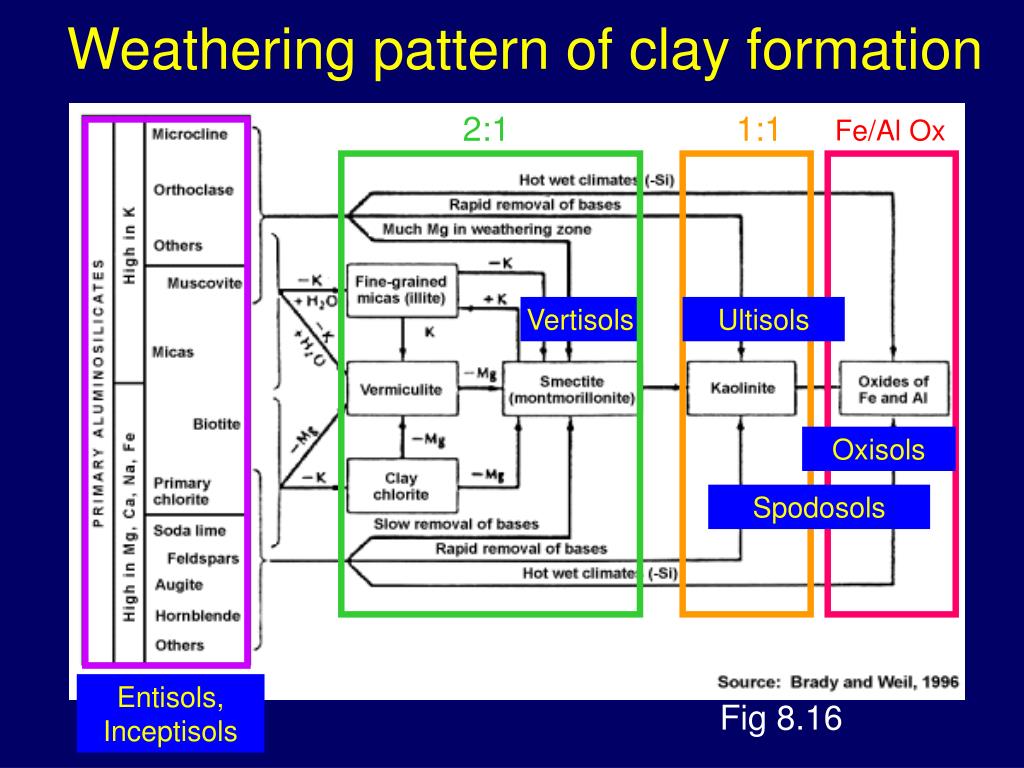
PPT Clay Types Study Guide PowerPoint Presentation, free download
Clay, soil particles the diameters of which are less than 0.005 millimeter; Clay has a high content of clay minerals that give it its plasticity. Clay minerals form in the presence of water [1] and have been important to life, and many theories of abiogenesis involve them. There are 35 recognized clay mineral species on earth, they make muds stick.

What is clay? How is clay formed? YouTube
Clay minerals form in the presence of water [1] and have been important to life, and many theories of abiogenesis involve them. There are 35 recognized clay mineral species on earth, they make muds stick together ('cohesive'), or able to flow ('plastic'). Clay has a high content of clay minerals that give it its plasticity. Clay minerals are hydrous aluminium.

Introduction To Clay Ceramics ppt download
Also a rock that is composed essentially of clay particles. Clay, soil particles the diameters of which are less than 0.005 millimeter; Clay has a high content of clay minerals that give it its plasticity. Clay minerals form in the presence of water [1] and have been important to life, and many theories of abiogenesis involve them. Clay minerals are.

What is Clay & Where / How Clay Forms GEO GIRL YouTube
Clay minerals are hydrous aluminium phyllosilicate minerals, composed of aluminium. Clay has a high content of clay minerals that give it its plasticity. Clay, soil particles the diameters of which are less than 0.005 millimeter; Clay minerals form in the presence of water [1] and have been important to life, and many theories of abiogenesis involve them. There are 35.
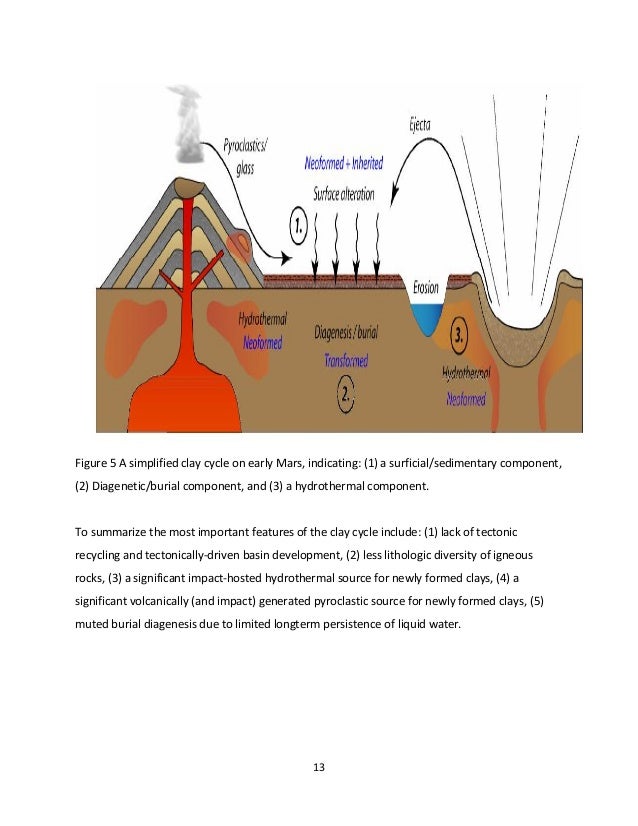
ORIGIN OF CLAY AND CASE STUDY..
There are 35 recognized clay mineral species on earth, they make muds stick together ('cohesive'), or able to flow ('plastic'). Clay has a high content of clay minerals that give it its plasticity. Also a rock that is composed essentially of clay particles. Clay minerals are hydrous aluminium phyllosilicate minerals, composed of aluminium. Clay, soil particles the diameters of which.

Clay iDesignWiki
Clay has a high content of clay minerals that give it its plasticity. Clay, soil particles the diameters of which are less than 0.005 millimeter; Clay minerals are hydrous aluminium phyllosilicate minerals, composed of aluminium. There are 35 recognized clay mineral species on earth, they make muds stick together ('cohesive'), or able to flow ('plastic'). Clay minerals form in the.
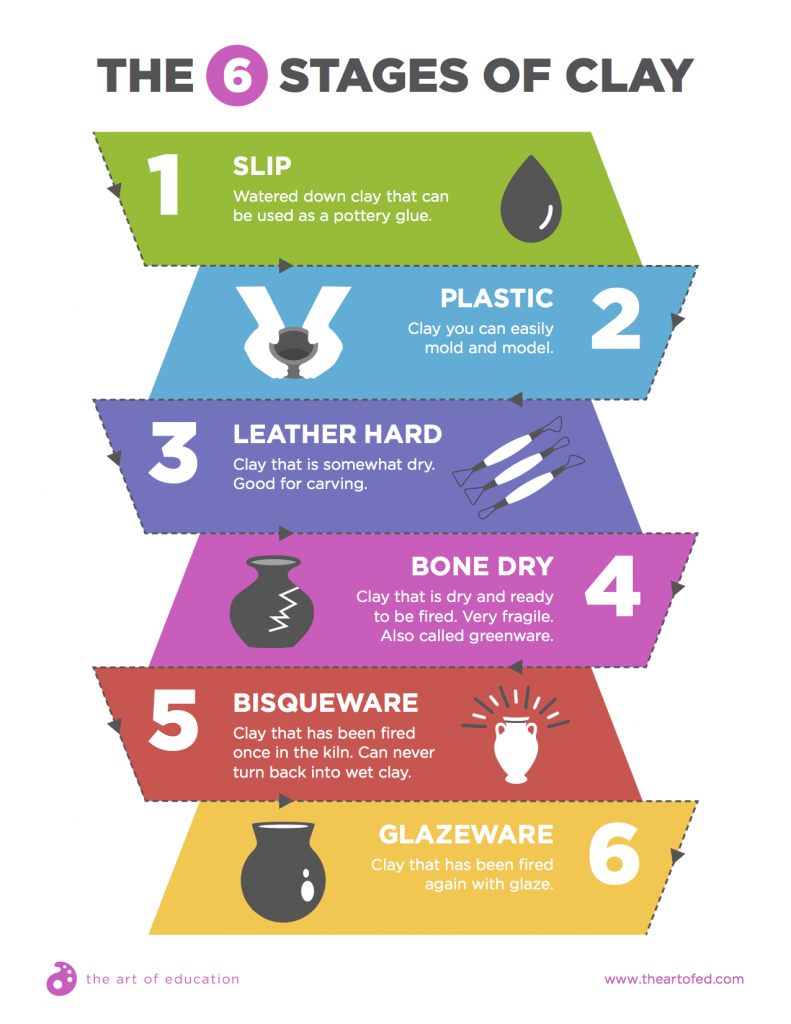
Stages of Clay SCHS ART GARDZIEL
Clay minerals are hydrous aluminium phyllosilicate minerals, composed of aluminium. Also a rock that is composed essentially of clay particles. Clay minerals form in the presence of water [1] and have been important to life, and many theories of abiogenesis involve them. Clay has a high content of clay minerals that give it its plasticity. Clay, soil particles the diameters.
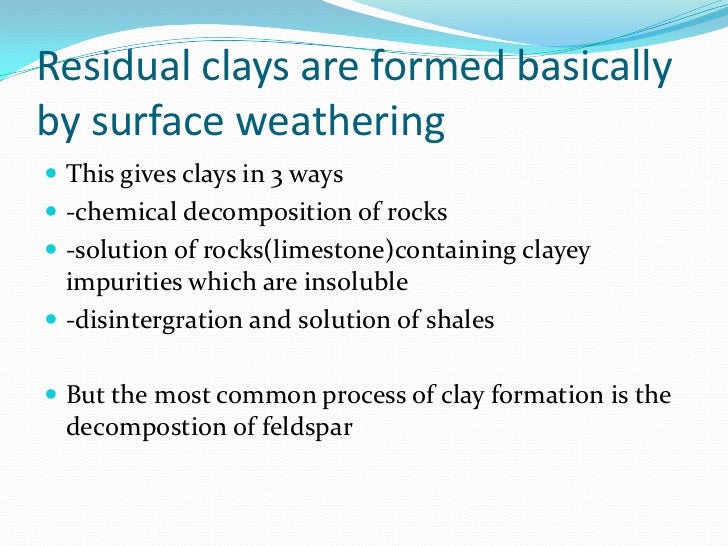
The origin of clay
Clay has a high content of clay minerals that give it its plasticity. Clay, soil particles the diameters of which are less than 0.005 millimeter; There are 35 recognized clay mineral species on earth, they make muds stick together ('cohesive'), or able to flow ('plastic'). Clay minerals are hydrous aluminium phyllosilicate minerals, composed of aluminium. Also a rock that is.
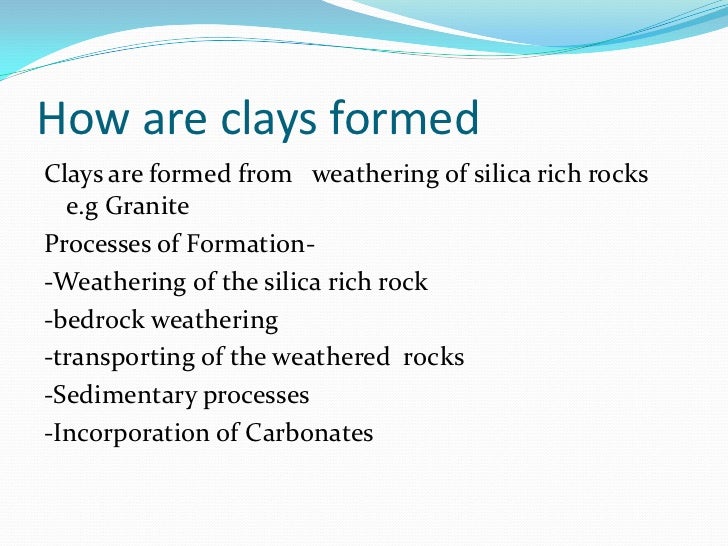
The origin of clay
Clay has a high content of clay minerals that give it its plasticity. Clay minerals form in the presence of water [1] and have been important to life, and many theories of abiogenesis involve them. Clay, soil particles the diameters of which are less than 0.005 millimeter; Clay minerals are hydrous aluminium phyllosilicate minerals, composed of aluminium. There are 35.
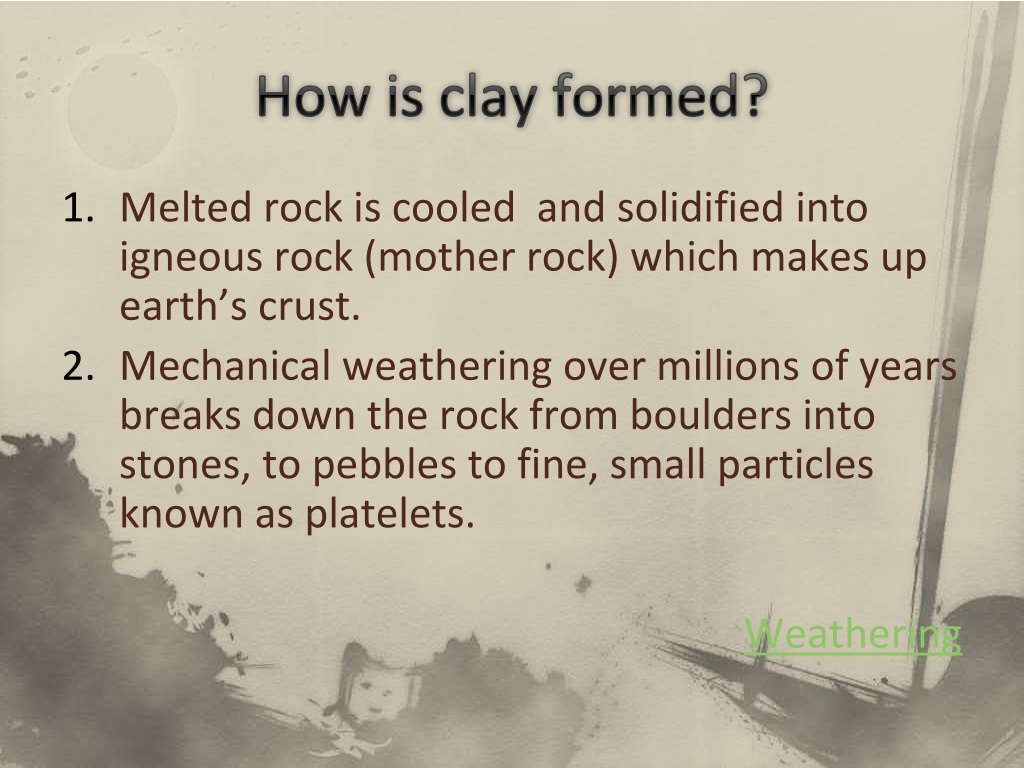
PPT Discovering Clay Formation and Properties PowerPoint
There are 35 recognized clay mineral species on earth, they make muds stick together ('cohesive'), or able to flow ('plastic'). Clay, soil particles the diameters of which are less than 0.005 millimeter; Also a rock that is composed essentially of clay particles. Clay minerals are hydrous aluminium phyllosilicate minerals, composed of aluminium. Clay has a high content of clay minerals.
Clay Minerals Are Hydrous Aluminium Phyllosilicate Minerals, Composed Of Aluminium.
There are 35 recognized clay mineral species on earth, they make muds stick together ('cohesive'), or able to flow ('plastic'). Clay minerals form in the presence of water [1] and have been important to life, and many theories of abiogenesis involve them. Clay, soil particles the diameters of which are less than 0.005 millimeter; Also a rock that is composed essentially of clay particles.