Probability Distribution Cheat Sheet - We do that by assigning a number to each event (e) called the probability of that event (p (e)). How likely something is to happen. Many events can't be predicted with total certainty. Probability is simply how likely something is to happen. The best we can say is how likely they are to happen, using the. The probability is a number between 0 and 1; The probability of an event is a number. Whenever we’re unsure about the outcome of an event, we can talk about the probabilities of. Probability is all about how likely is an event to happen. For example, tossing a coin.
Many events can't be predicted with total certainty. Whenever we’re unsure about the outcome of an event, we can talk about the probabilities of. The best we can say is how likely they are to happen, using the. The probability of an event is a number. Probability is simply how likely something is to happen. For example, tossing a coin. Probability is all about how likely is an event to happen. The larger the probability, the more likely the desired outcome is to occur. For a random experiment with sample space s, the probability of happening of an event a is. How likely something is to happen.
Probability is simply how likely something is to happen. Probability is all about how likely is an event to happen. The larger the probability, the more likely the desired outcome is to occur. The probability is a number between 0 and 1; Many events can't be predicted with total certainty. For example, tossing a coin. We do that by assigning a number to each event (e) called the probability of that event (p (e)). Whenever we’re unsure about the outcome of an event, we can talk about the probabilities of. For a random experiment with sample space s, the probability of happening of an event a is. How likely something is to happen.
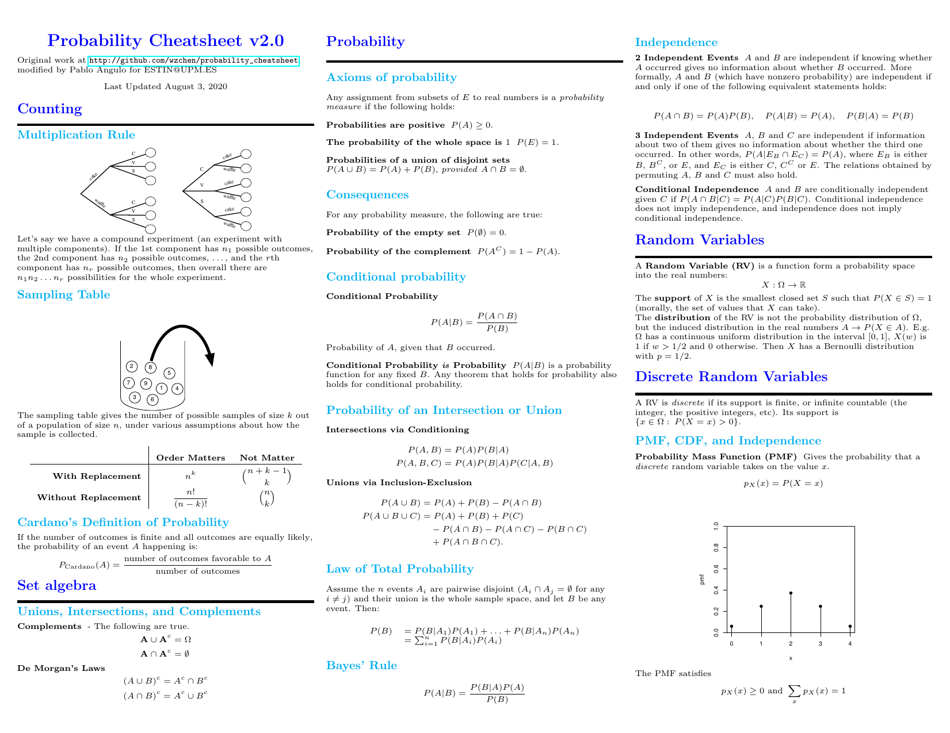
Probability Cheatsheet Download Printable Pdf Templaterollerprobability
Whenever we’re unsure about the outcome of an event, we can talk about the probabilities of. We do that by assigning a number to each event (e) called the probability of that event (p (e)). The probability of an event is a number. For example, tossing a coin. Probability is simply how likely something is to happen.
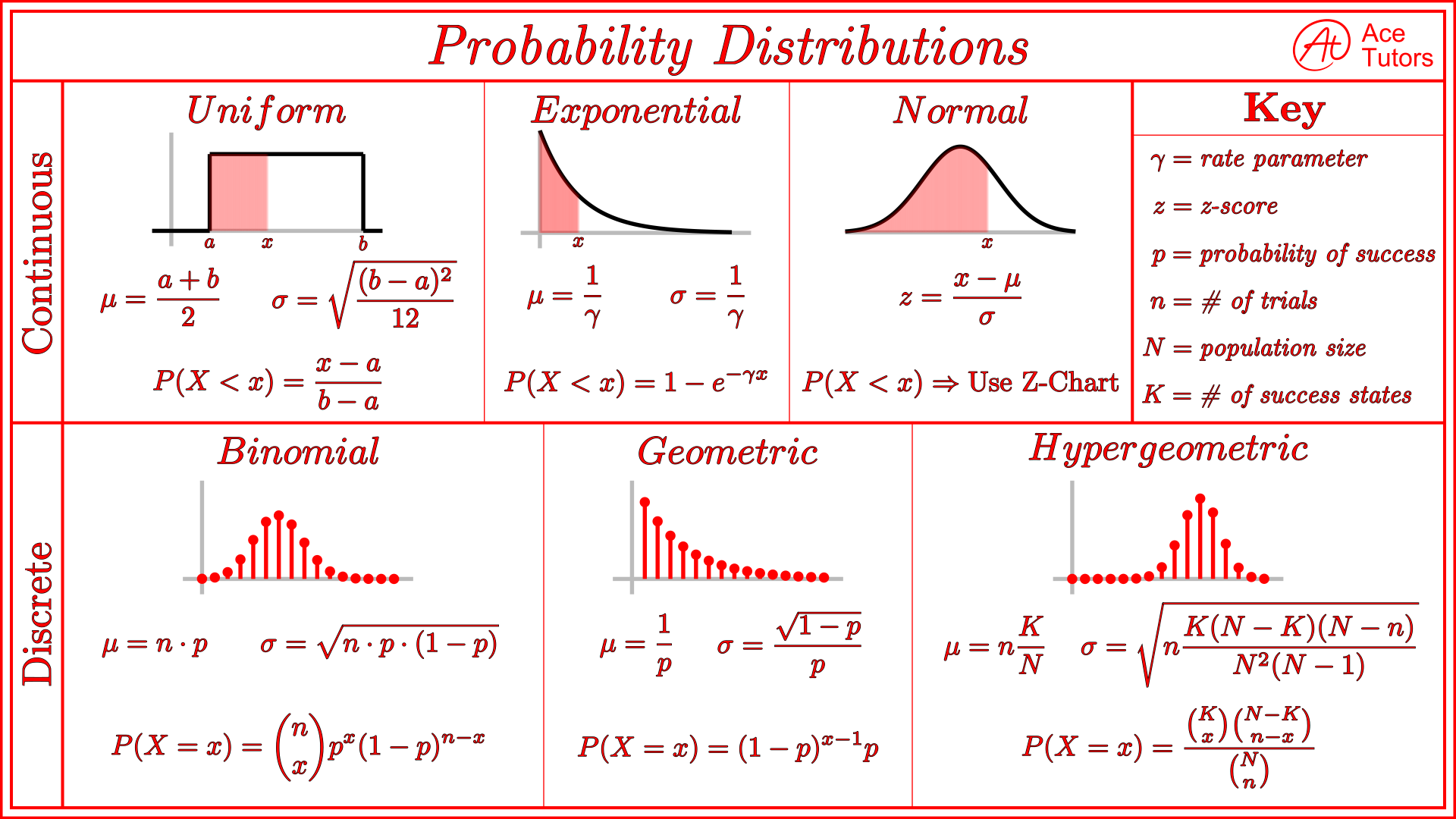
Probability Distribution Cheat Sheet Calculus Ace Tutors Blog
Whenever we’re unsure about the outcome of an event, we can talk about the probabilities of. Probability is all about how likely is an event to happen. Many events can't be predicted with total certainty. Probability is simply how likely something is to happen. The larger the probability, the more likely the desired outcome is to occur.
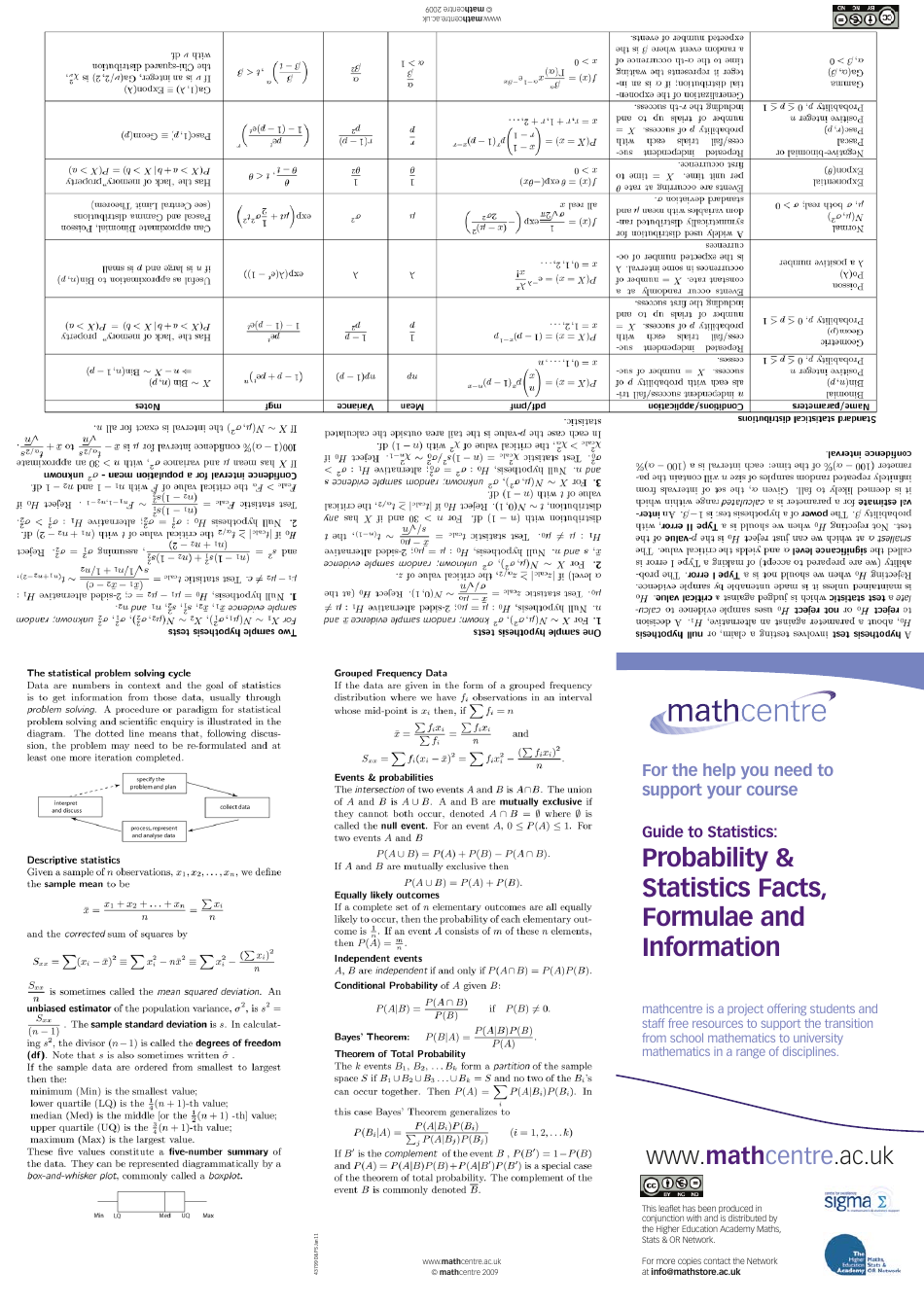
Probability and Statistics Cheat Sheet Mathcentre Download Printable
How likely something is to happen. For a random experiment with sample space s, the probability of happening of an event a is. The probability is a number between 0 and 1; Whenever we’re unsure about the outcome of an event, we can talk about the probabilities of. Probability is all about how likely is an event to happen.
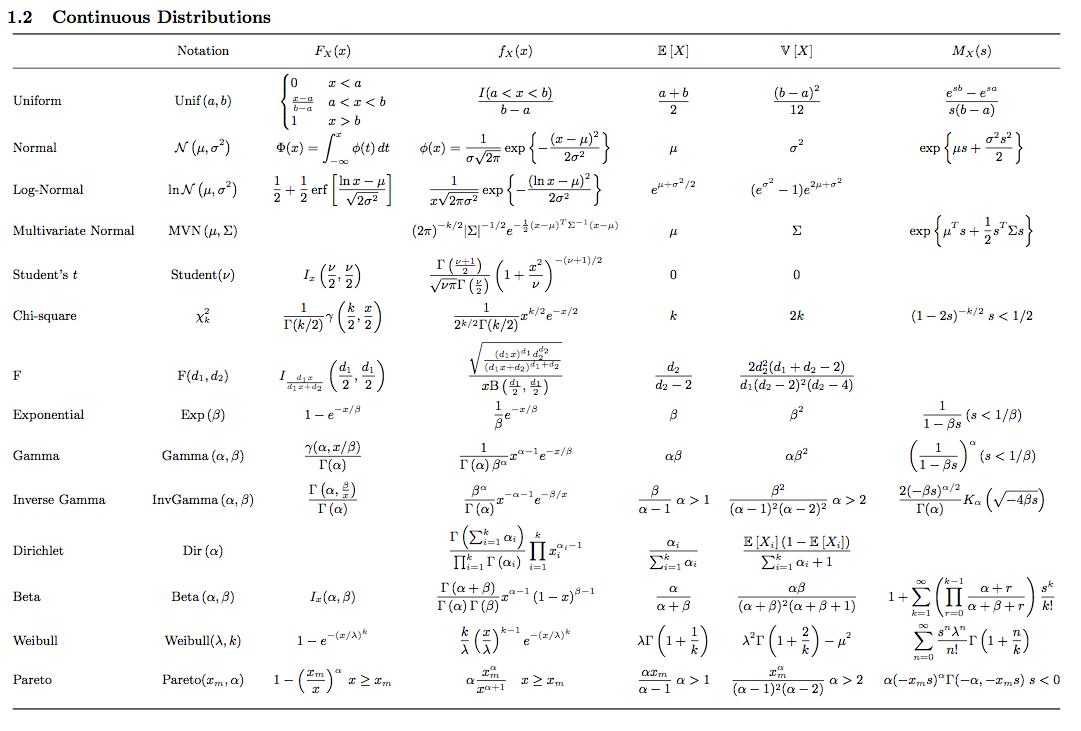
Matthias Vallentin Probability and Statistics Cheat Sheet
The best we can say is how likely they are to happen, using the. The larger the probability, the more likely the desired outcome is to occur. Probability is all about how likely is an event to happen. For example, tossing a coin. The probability is a number between 0 and 1;
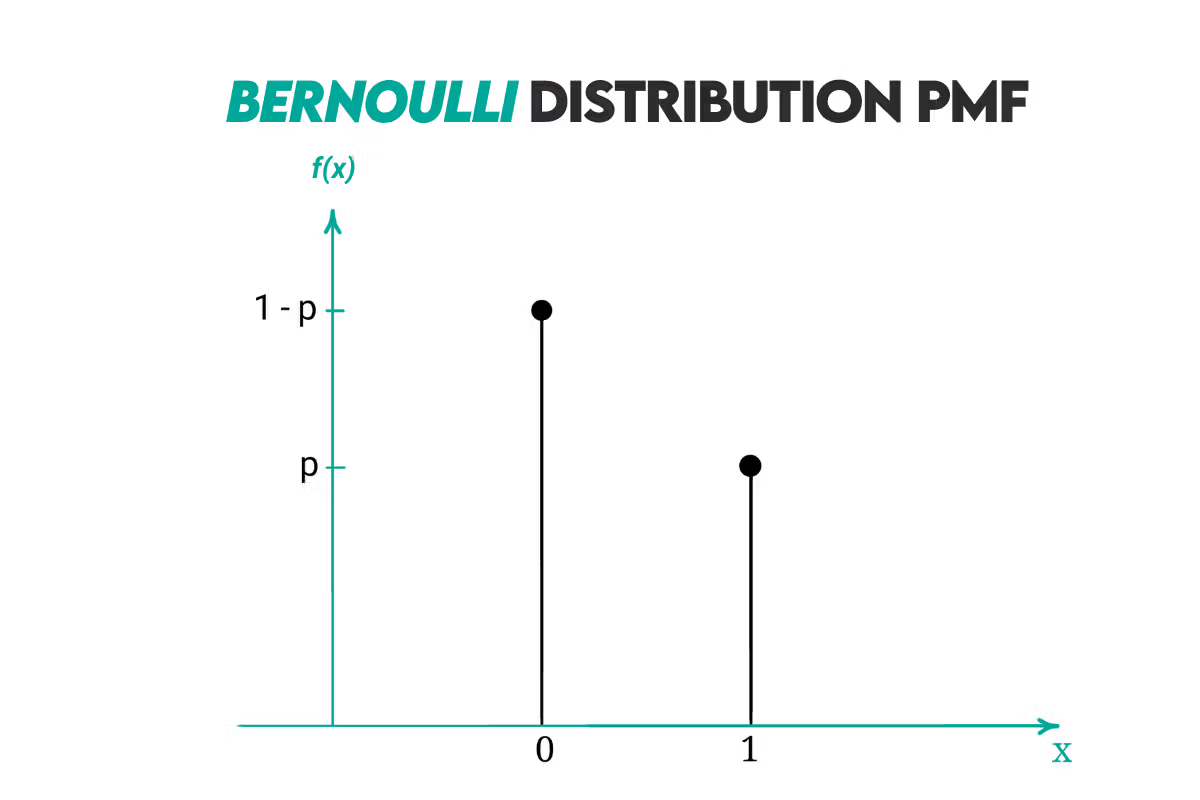
Probability Cheat Sheet Rules, Laws, Concepts, and Examples
For a random experiment with sample space s, the probability of happening of an event a is. Probability is all about how likely is an event to happen. Probability is simply how likely something is to happen. The larger the probability, the more likely the desired outcome is to occur. How likely something is to happen.
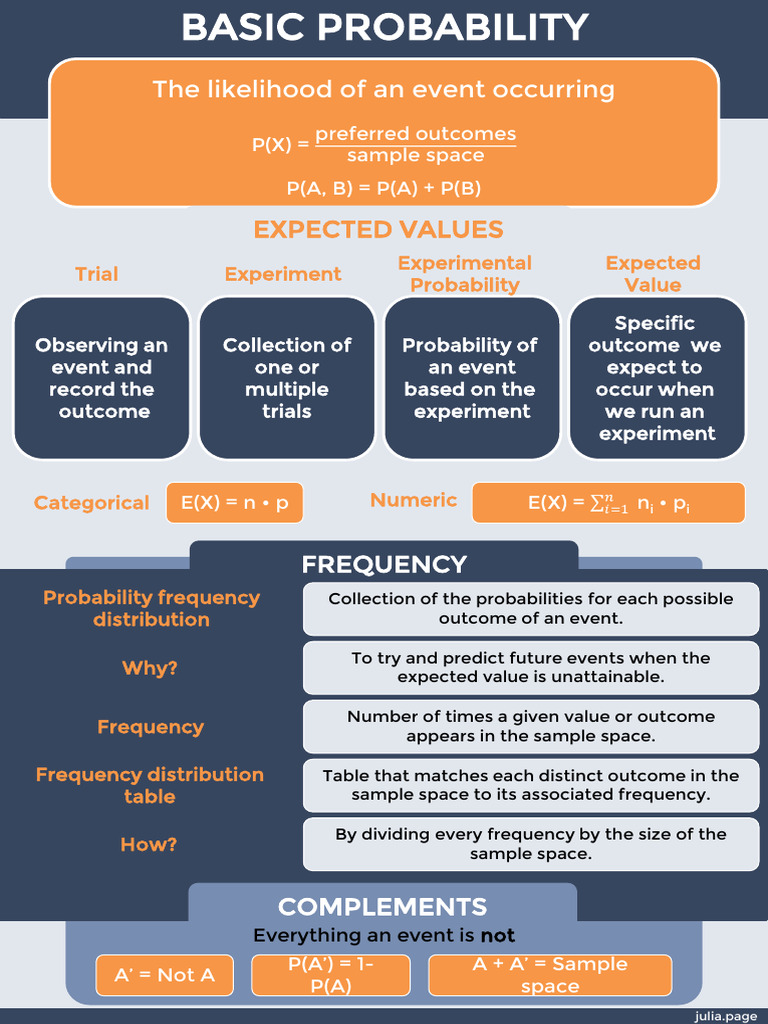
Probability Cheat Sheet PDF Probability Distribution Statistical
Many events can't be predicted with total certainty. Probability is simply how likely something is to happen. For example, tossing a coin. How likely something is to happen. The larger the probability, the more likely the desired outcome is to occur.
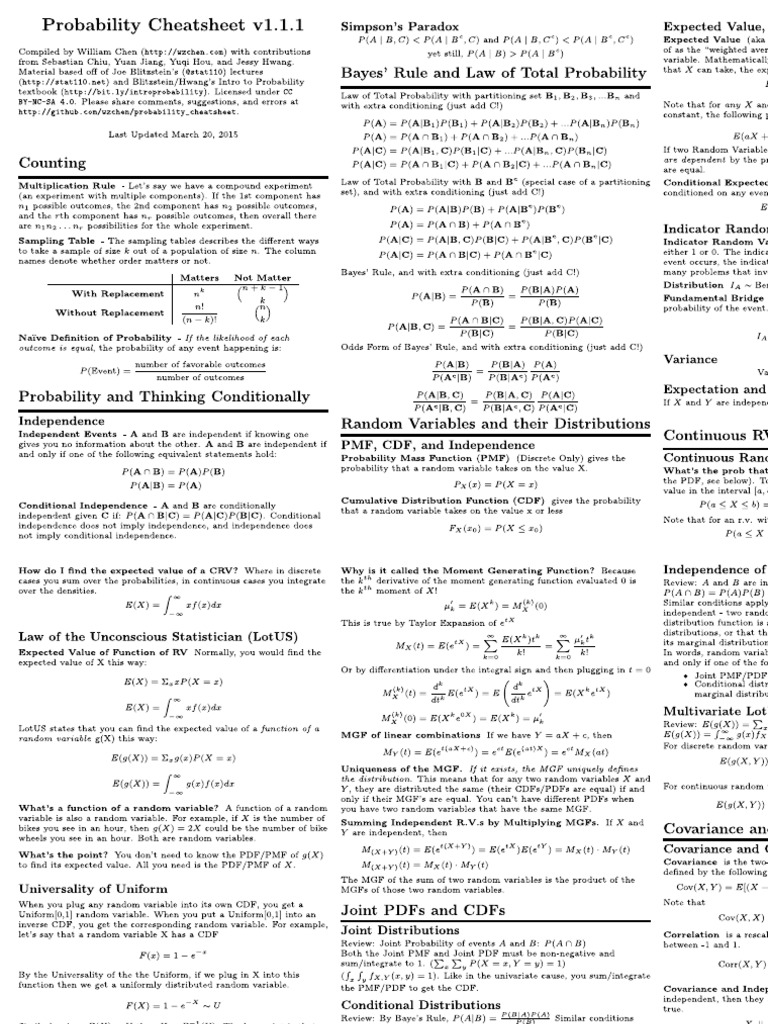
Probability Cheat Sheet PDF
The probability of an event is a number. Whenever we’re unsure about the outcome of an event, we can talk about the probabilities of. For example, tossing a coin. The best we can say is how likely they are to happen, using the. We do that by assigning a number to each event (e) called the probability of that event.
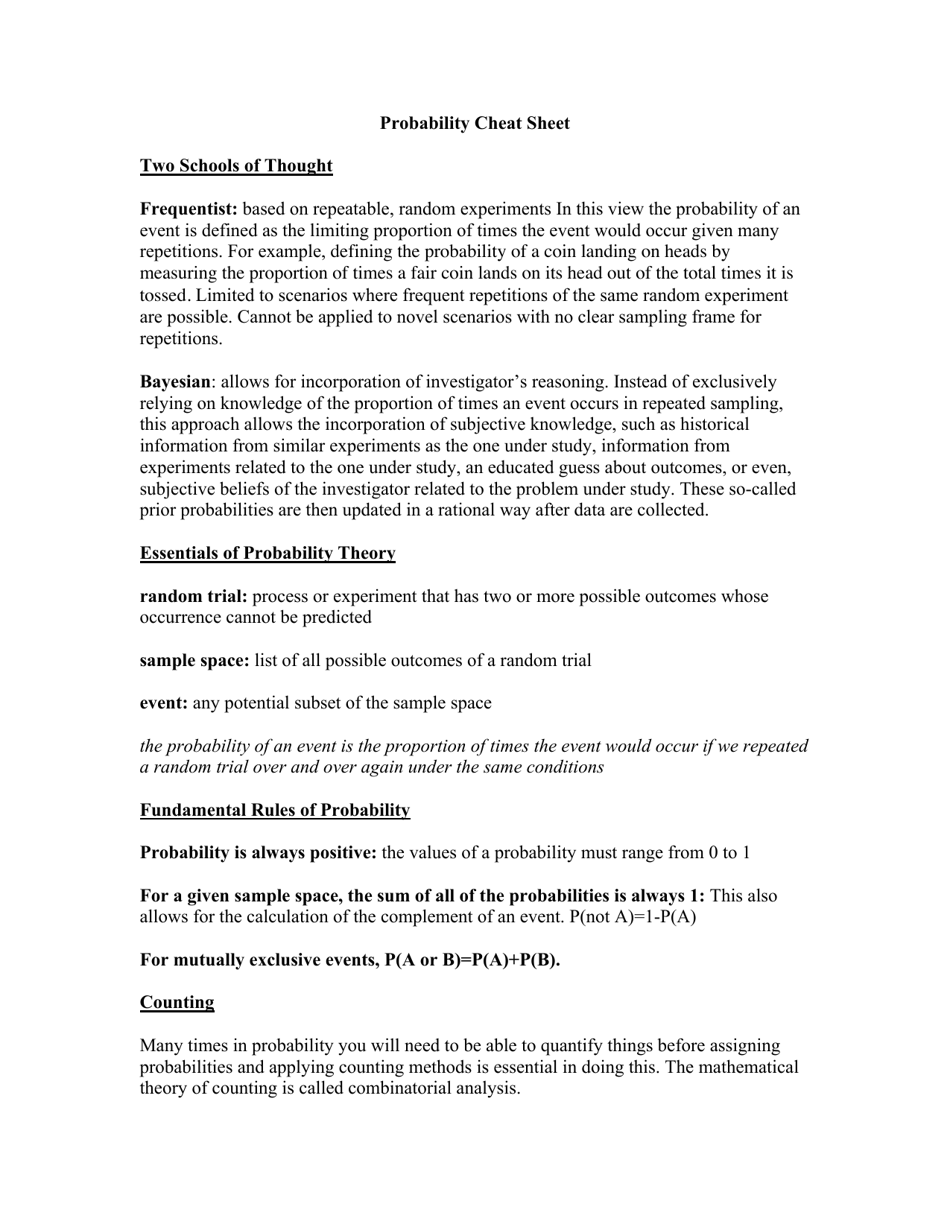
Probability Theory Cheat Sheet
Probability is all about how likely is an event to happen. Many events can't be predicted with total certainty. The best we can say is how likely they are to happen, using the. Whenever we’re unsure about the outcome of an event, we can talk about the probabilities of. The larger the probability, the more likely the desired outcome is.

Probability Rules Cheat Sheet
The probability is a number between 0 and 1; Probability is simply how likely something is to happen. The best we can say is how likely they are to happen, using the. Whenever we’re unsure about the outcome of an event, we can talk about the probabilities of. The larger the probability, the more likely the desired outcome is to.

Cheat Sheet Bu255 PDF Probability Distribution Mean
The larger the probability, the more likely the desired outcome is to occur. The probability is a number between 0 and 1; For a random experiment with sample space s, the probability of happening of an event a is. Probability is all about how likely is an event to happen. The probability of an event is a number.
Probability Is All About How Likely Is An Event To Happen.
The probability of an event is a number. The best we can say is how likely they are to happen, using the. The probability is a number between 0 and 1; The larger the probability, the more likely the desired outcome is to occur.
Probability Is Simply How Likely Something Is To Happen.
For example, tossing a coin. For a random experiment with sample space s, the probability of happening of an event a is. Whenever we’re unsure about the outcome of an event, we can talk about the probabilities of. How likely something is to happen.
Many Events Can't Be Predicted With Total Certainty.
We do that by assigning a number to each event (e) called the probability of that event (p (e)).