Javascript Template Literals Vs String Concatenation - I have found a tiny difference between the two: Template literals coerce their expressions directly to strings, while addition coerces its operands to primitives first. If the expression evaluates to an object that has a @@toprimitive method, that method would. They offer a more intuitive and powerful way to handle strings compared to the traditional string concatenation methods in es5. It’s a simple change that can have. They provide a more concise and readable way to. But surprisingly the performance of template literals is almost the. Using template literals instead of the `+` operator for string concatenation enhances code readability and reduces errors. Template literals are a modern feature introduced in ecmascript 2015 (es6).
But surprisingly the performance of template literals is almost the. Template literals coerce their expressions directly to strings, while addition coerces its operands to primitives first. Using template literals instead of the `+` operator for string concatenation enhances code readability and reduces errors. They provide a more concise and readable way to. It’s a simple change that can have. Template literals are a modern feature introduced in ecmascript 2015 (es6). I have found a tiny difference between the two: They offer a more intuitive and powerful way to handle strings compared to the traditional string concatenation methods in es5. If the expression evaluates to an object that has a @@toprimitive method, that method would.
I have found a tiny difference between the two: Template literals coerce their expressions directly to strings, while addition coerces its operands to primitives first. If the expression evaluates to an object that has a @@toprimitive method, that method would. It’s a simple change that can have. But surprisingly the performance of template literals is almost the. They offer a more intuitive and powerful way to handle strings compared to the traditional string concatenation methods in es5. Template literals are a modern feature introduced in ecmascript 2015 (es6). They provide a more concise and readable way to. Using template literals instead of the `+` operator for string concatenation enhances code readability and reduces errors.

Benchmarking String Literal ("") vs Template Literal (``) using
They provide a more concise and readable way to. It’s a simple change that can have. But surprisingly the performance of template literals is almost the. If the expression evaluates to an object that has a @@toprimitive method, that method would. Template literals are a modern feature introduced in ecmascript 2015 (es6).

Concatenation in Javascript versus Template Literals/Template Strings
Template literals are a modern feature introduced in ecmascript 2015 (es6). They provide a more concise and readable way to. I have found a tiny difference between the two: Using template literals instead of the `+` operator for string concatenation enhances code readability and reduces errors. Template literals coerce their expressions directly to strings, while addition coerces its operands to.

String Concatenation and Template Literals JavaScript for Beginners
Using template literals instead of the `+` operator for string concatenation enhances code readability and reduces errors. But surprisingly the performance of template literals is almost the. They provide a more concise and readable way to. If the expression evaluates to an object that has a @@toprimitive method, that method would. I have found a tiny difference between the two:

Difference between String concatenation and Template literals .
They offer a more intuitive and powerful way to handle strings compared to the traditional string concatenation methods in es5. I have found a tiny difference between the two: But surprisingly the performance of template literals is almost the. They provide a more concise and readable way to. If the expression evaluates to an object that has a @@toprimitive method,.

Javascript Template Literals Vs String Concatenation Content Calendar
They offer a more intuitive and powerful way to handle strings compared to the traditional string concatenation methods in es5. If the expression evaluates to an object that has a @@toprimitive method, that method would. But surprisingly the performance of template literals is almost the. Using template literals instead of the `+` operator for string concatenation enhances code readability and.
String concat in JavaScript Performance Comparison Technical Feeder
It’s a simple change that can have. I have found a tiny difference between the two: They provide a more concise and readable way to. They offer a more intuitive and powerful way to handle strings compared to the traditional string concatenation methods in es5. Template literals are a modern feature introduced in ecmascript 2015 (es6).

JavaScript for Beginners Lesson 5 String Concatenation and Template
I have found a tiny difference between the two: Using template literals instead of the `+` operator for string concatenation enhances code readability and reduces errors. They offer a more intuitive and powerful way to handle strings compared to the traditional string concatenation methods in es5. Template literals are a modern feature introduced in ecmascript 2015 (es6). They provide a.

Strings vs template literals in javascript YouTube
If the expression evaluates to an object that has a @@toprimitive method, that method would. I have found a tiny difference between the two: It’s a simple change that can have. But surprisingly the performance of template literals is almost the. Template literals are a modern feature introduced in ecmascript 2015 (es6).
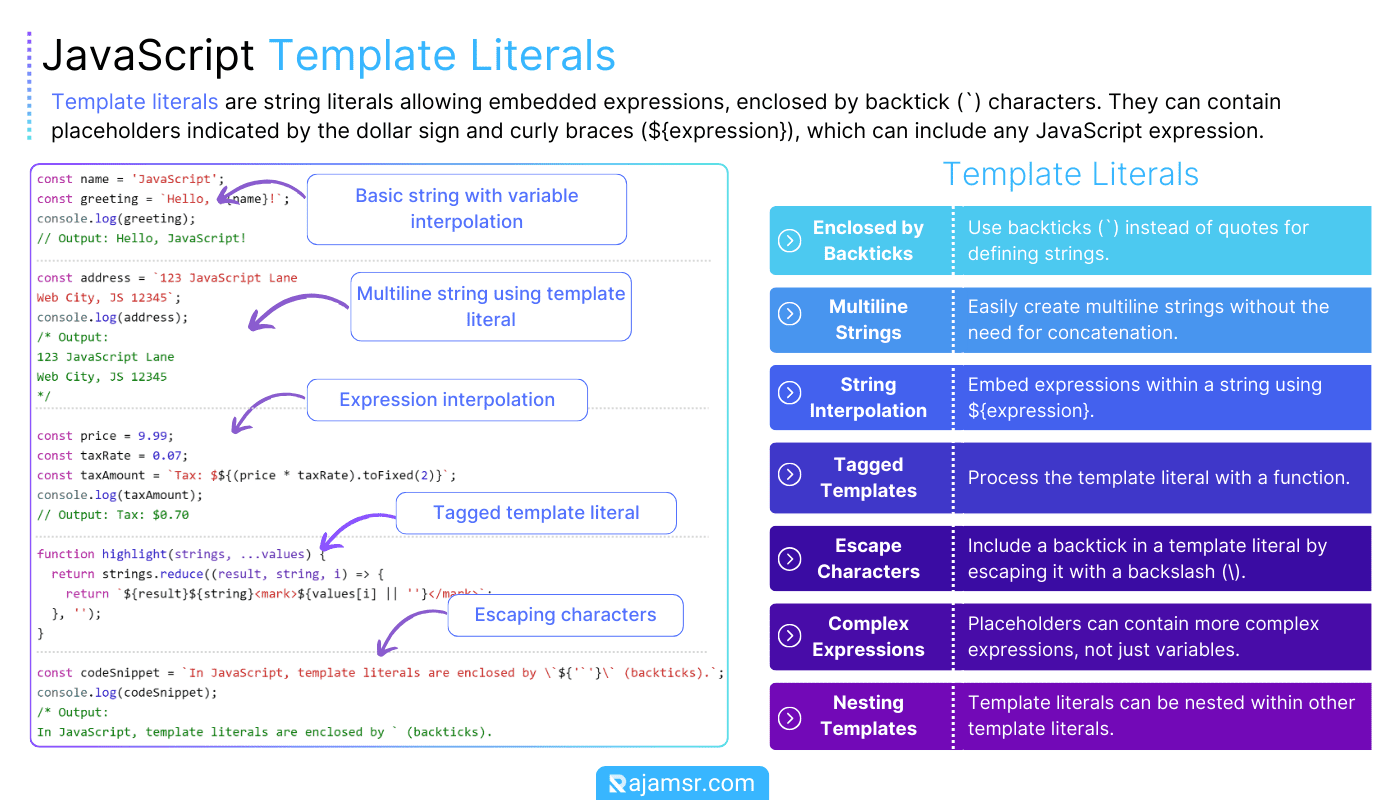
Javascript Template Multiline at Hudson Facy blog
They offer a more intuitive and powerful way to handle strings compared to the traditional string concatenation methods in es5. Template literals are a modern feature introduced in ecmascript 2015 (es6). But surprisingly the performance of template literals is almost the. Template literals coerce their expressions directly to strings, while addition coerces its operands to primitives first. Using template literals.

JavaScript Template Literals vs. String Concatenation YouTube
I have found a tiny difference between the two: It’s a simple change that can have. Using template literals instead of the `+` operator for string concatenation enhances code readability and reduces errors. If the expression evaluates to an object that has a @@toprimitive method, that method would. They provide a more concise and readable way to.
Template Literals Coerce Their Expressions Directly To Strings, While Addition Coerces Its Operands To Primitives First.
Template literals are a modern feature introduced in ecmascript 2015 (es6). If the expression evaluates to an object that has a @@toprimitive method, that method would. Using template literals instead of the `+` operator for string concatenation enhances code readability and reduces errors. It’s a simple change that can have.
They Offer A More Intuitive And Powerful Way To Handle Strings Compared To The Traditional String Concatenation Methods In Es5.
I have found a tiny difference between the two: But surprisingly the performance of template literals is almost the. They provide a more concise and readable way to.