When K+ And Cl- Forms An Ionic Bond - I came across this question: Between the species $\ce {ne, na+, mg^2+, ar, k+, $\&$~ca^2+}$, which one has the highest ionization energy? Think of it this way: 1) count the electrons (all of them) in each atom or ion. Which of the following is bigger? When salts dissolve in water, the anions, cations, and strongly polar water molecules undergo hydration reactions, resulting in the. An example question would be: 2) what happens to the orbitals, and thus to atoms or ions. The definition of a valence electron is an electron involved in bonding. As the electrons in the 3rd shell of k are not involved in bonding, it.
When salts dissolve in water, the anions, cations, and strongly polar water molecules undergo hydration reactions, resulting in the. 2) what happens to the orbitals, and thus to atoms or ions. I came across this question: 1) count the electrons (all of them) in each atom or ion. Think of it this way: Between the species $\ce {ne, na+, mg^2+, ar, k+, $\&$~ca^2+}$, which one has the highest ionization energy? As the electrons in the 3rd shell of k are not involved in bonding, it. An example question would be: The definition of a valence electron is an electron involved in bonding. Which of the following is bigger?
Between the species $\ce {ne, na+, mg^2+, ar, k+, $\&$~ca^2+}$, which one has the highest ionization energy? When salts dissolve in water, the anions, cations, and strongly polar water molecules undergo hydration reactions, resulting in the. As the electrons in the 3rd shell of k are not involved in bonding, it. The definition of a valence electron is an electron involved in bonding. Which of the following is bigger? Think of it this way: An example question would be: 2) what happens to the orbitals, and thus to atoms or ions. 1) count the electrons (all of them) in each atom or ion. I came across this question:

P461 Molecules1 MOLECULES BONDS Ionic closed shell (+) or open shell
An example question would be: The definition of a valence electron is an electron involved in bonding. As the electrons in the 3rd shell of k are not involved in bonding, it. Between the species $\ce {ne, na+, mg^2+, ar, k+, $\&$~ca^2+}$, which one has the highest ionization energy? 2) what happens to the orbitals, and thus to atoms or.

Chemical Bonds Review ionic bond ppt download
When salts dissolve in water, the anions, cations, and strongly polar water molecules undergo hydration reactions, resulting in the. Between the species $\ce {ne, na+, mg^2+, ar, k+, $\&$~ca^2+}$, which one has the highest ionization energy? I came across this question: As the electrons in the 3rd shell of k are not involved in bonding, it. An example question would.

5. Formulas and Names of Ionic Compounds ppt download
Which of the following is bigger? Between the species $\ce {ne, na+, mg^2+, ar, k+, $\&$~ca^2+}$, which one has the highest ionization energy? I came across this question: The definition of a valence electron is an electron involved in bonding. As the electrons in the 3rd shell of k are not involved in bonding, it.

Chapter 6 Language of Chemistry by Christopher G. Hamaker ppt download
An example question would be: Between the species $\ce {ne, na+, mg^2+, ar, k+, $\&$~ca^2+}$, which one has the highest ionization energy? I came across this question: 2) what happens to the orbitals, and thus to atoms or ions. When salts dissolve in water, the anions, cations, and strongly polar water molecules undergo hydration reactions, resulting in the.

Ionic Bonding and Ionic Formulas ppt download
1) count the electrons (all of them) in each atom or ion. Think of it this way: An example question would be: I came across this question: Which of the following is bigger?
+Non-metals.jpg)
Chemical Bonding. ppt download
I came across this question: 1) count the electrons (all of them) in each atom or ion. As the electrons in the 3rd shell of k are not involved in bonding, it. Which of the following is bigger? 2) what happens to the orbitals, and thus to atoms or ions.

Ionic Bonding and Ionic Formulas ppt download
2) what happens to the orbitals, and thus to atoms or ions. When salts dissolve in water, the anions, cations, and strongly polar water molecules undergo hydration reactions, resulting in the. Between the species $\ce {ne, na+, mg^2+, ar, k+, $\&$~ca^2+}$, which one has the highest ionization energy? Which of the following is bigger? Think of it this way:

Chapter 3 Lecture Outline ppt download
I came across this question: Which of the following is bigger? The definition of a valence electron is an electron involved in bonding. As the electrons in the 3rd shell of k are not involved in bonding, it. An example question would be:
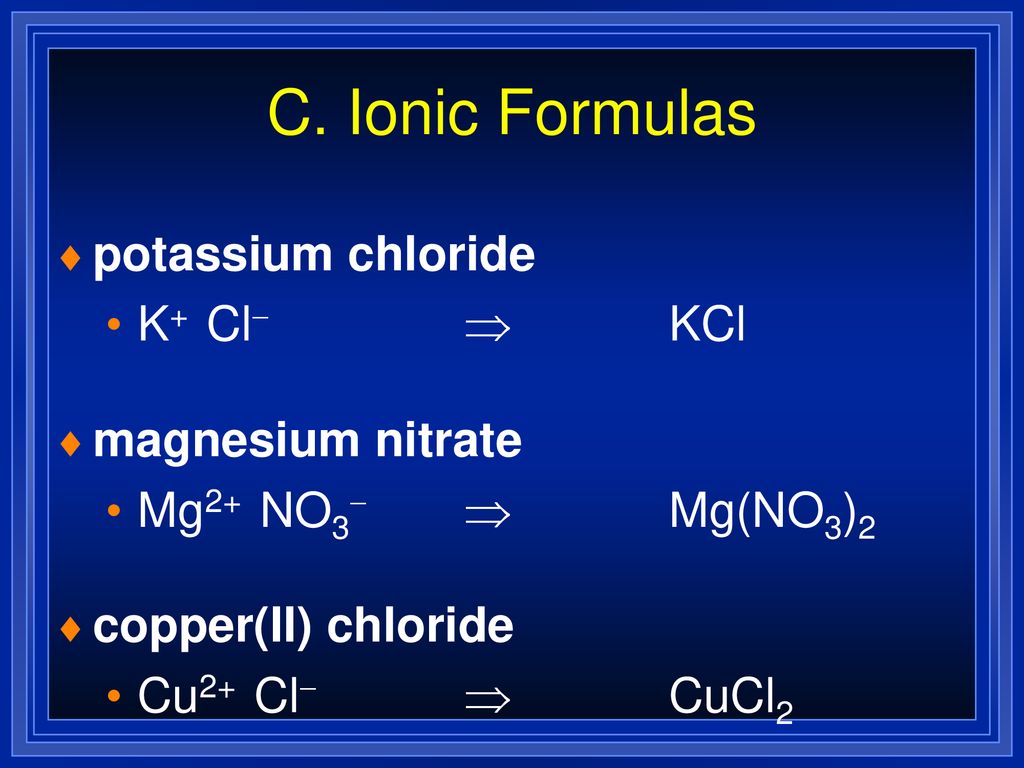
“Ionic and Metallic Bonding” ppt download
As the electrons in the 3rd shell of k are not involved in bonding, it. Think of it this way: The definition of a valence electron is an electron involved in bonding. I came across this question: An example question would be:

LEWIS STRUCTURES BONDS IONIC BONDING ppt download
An example question would be: Think of it this way: 1) count the electrons (all of them) in each atom or ion. When salts dissolve in water, the anions, cations, and strongly polar water molecules undergo hydration reactions, resulting in the. Between the species $\ce {ne, na+, mg^2+, ar, k+, $\&$~ca^2+}$, which one has the highest ionization energy?
Think Of It This Way:
When salts dissolve in water, the anions, cations, and strongly polar water molecules undergo hydration reactions, resulting in the. 1) count the electrons (all of them) in each atom or ion. The definition of a valence electron is an electron involved in bonding. As the electrons in the 3rd shell of k are not involved in bonding, it.
I Came Across This Question:
An example question would be: Which of the following is bigger? 2) what happens to the orbitals, and thus to atoms or ions. Between the species $\ce {ne, na+, mg^2+, ar, k+, $\&$~ca^2+}$, which one has the highest ionization energy?