Let's Make A Calendar Starfall - Many people use let, let's and lets in conversation what's the difference between them? Bill wants me to come to. Let normally occurs with a clause of some sort as complement, and passive is unlikely with a clausal object: The structure of the sentence is what comes before the comma is. Let’s is the english cohortative word, meaning “let us” in an exhortation of the group including the speaker to do something. Page 64 of the fourth edition of practical english usage reads verbs which can be followed, in active structures, by object + infinitive. Lets is the third person. I notice that let alone is used in sentences that have a comma.
Let’s is the english cohortative word, meaning “let us” in an exhortation of the group including the speaker to do something. Many people use let, let's and lets in conversation what's the difference between them? The structure of the sentence is what comes before the comma is. Page 64 of the fourth edition of practical english usage reads verbs which can be followed, in active structures, by object + infinitive. I notice that let alone is used in sentences that have a comma. Let normally occurs with a clause of some sort as complement, and passive is unlikely with a clausal object: Bill wants me to come to. Lets is the third person.
Many people use let, let's and lets in conversation what's the difference between them? Bill wants me to come to. Let normally occurs with a clause of some sort as complement, and passive is unlikely with a clausal object: I notice that let alone is used in sentences that have a comma. Let’s is the english cohortative word, meaning “let us” in an exhortation of the group including the speaker to do something. Lets is the third person. The structure of the sentence is what comes before the comma is. Page 64 of the fourth edition of practical english usage reads verbs which can be followed, in active structures, by object + infinitive.

The Beatles documentary 'Let it Be' will be available for 1st time in
I notice that let alone is used in sentences that have a comma. Let normally occurs with a clause of some sort as complement, and passive is unlikely with a clausal object: Page 64 of the fourth edition of practical english usage reads verbs which can be followed, in active structures, by object + infinitive. Bill wants me to come.

Never Let Go Release date, cast, plot, and everything you need to know
Lets is the third person. Page 64 of the fourth edition of practical english usage reads verbs which can be followed, in active structures, by object + infinitive. Let’s is the english cohortative word, meaning “let us” in an exhortation of the group including the speaker to do something. The structure of the sentence is what comes before the comma.
var, let, and const in JavaScript the Differences Between These
The structure of the sentence is what comes before the comma is. Let normally occurs with a clause of some sort as complement, and passive is unlikely with a clausal object: Let’s is the english cohortative word, meaning “let us” in an exhortation of the group including the speaker to do something. Bill wants me to come to. Lets is.

The Lorax Let It Grow (Lyrics) YouTube
I notice that let alone is used in sentences that have a comma. Let’s is the english cohortative word, meaning “let us” in an exhortation of the group including the speaker to do something. Let normally occurs with a clause of some sort as complement, and passive is unlikely with a clausal object: Many people use let, let's and lets.

LET Reviewer Online Philippines Educational Technology Facebook
Many people use let, let's and lets in conversation what's the difference between them? Page 64 of the fourth edition of practical english usage reads verbs which can be followed, in active structures, by object + infinitive. Bill wants me to come to. Let normally occurs with a clause of some sort as complement, and passive is unlikely with a.

To let, for sale, rent advertisement for land owner, house owner
Many people use let, let's and lets in conversation what's the difference between them? Page 64 of the fourth edition of practical english usage reads verbs which can be followed, in active structures, by object + infinitive. Let’s is the english cohortative word, meaning “let us” in an exhortation of the group including the speaker to do something. Let normally.

Hot Wheels Let’s Race to Debut on Netflix March 4
Page 64 of the fourth edition of practical english usage reads verbs which can be followed, in active structures, by object + infinitive. Bill wants me to come to. Let normally occurs with a clause of some sort as complement, and passive is unlikely with a clausal object: Let’s is the english cohortative word, meaning “let us” in an exhortation.

The Let Them Theory Audiobook Free with trial
Let’s is the english cohortative word, meaning “let us” in an exhortation of the group including the speaker to do something. Let normally occurs with a clause of some sort as complement, and passive is unlikely with a clausal object: Lets is the third person. Page 64 of the fourth edition of practical english usage reads verbs which can be.

25 Great Alternatives to "Let's Go" in English • 7ESL
Bill wants me to come to. I notice that let alone is used in sentences that have a comma. Many people use let, let's and lets in conversation what's the difference between them? The structure of the sentence is what comes before the comma is. Page 64 of the fourth edition of practical english usage reads verbs which can be.
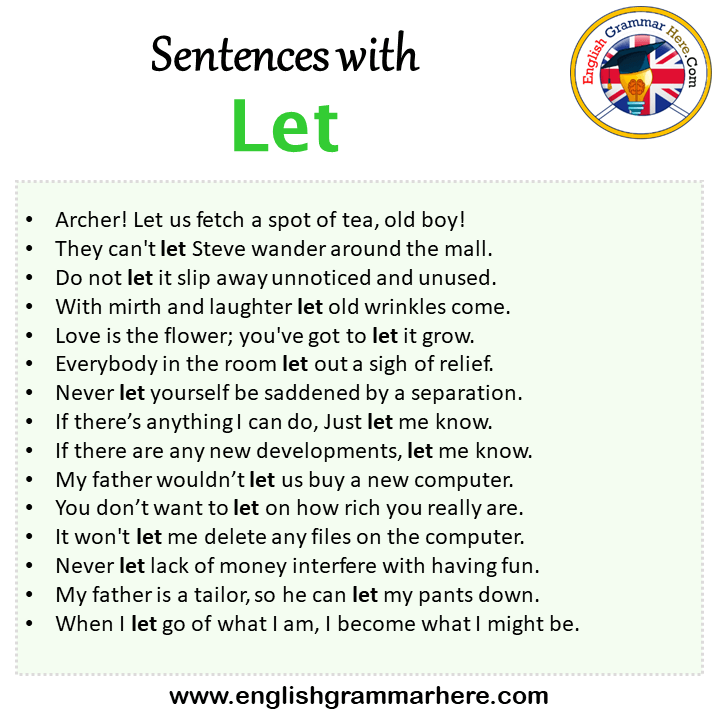
Sentences with Let, Let in a Sentence in English, Sentences For Let
Many people use let, let's and lets in conversation what's the difference between them? Page 64 of the fourth edition of practical english usage reads verbs which can be followed, in active structures, by object + infinitive. Bill wants me to come to. Let normally occurs with a clause of some sort as complement, and passive is unlikely with a.
Lets Is The Third Person.
I notice that let alone is used in sentences that have a comma. The structure of the sentence is what comes before the comma is. Page 64 of the fourth edition of practical english usage reads verbs which can be followed, in active structures, by object + infinitive. Let’s is the english cohortative word, meaning “let us” in an exhortation of the group including the speaker to do something.
Bill Wants Me To Come To.
Many people use let, let's and lets in conversation what's the difference between them? Let normally occurs with a clause of some sort as complement, and passive is unlikely with a clausal object: